Transcribed for online reading from the preserved original document.
0% read
Text size100%
The Perils of Pauline, Part 1
James and Aleda Littlefield
By now you are aware that Aleda’s mother’s family came from Sweden. They emigrated in the last decade of the 19th Century beginning in 1890 with Aleda’s mother’s (Alice Elvira) aunt, Paulina Margarita Åström. We do know that prior to that Aleda’s grandfather moved from northern Sweden – near Umeå in Vasterbotten lan – to southern Sweden – near Växjö – in Kronoberg County. With him moved his wife, Karolina Ulrika and their five children, the oldest of whom was Anders Alfred and the second child was Paulina Margarita, born May 7, 1871. They purchased a farm near Virestad which is about 50 km (31 mi) southwest of Växjö. It was there that Paulina’s older brother, Anders Alfred, met and married Ida Amalia Sundberg, in 1891. This fact is important, one reason being that they had six children, one of whom was Aleda’s mother, Alice Elvira, though she was born in the States.
For reasons yet to be ascertained, the family decided to emigrate to America. Someone has to be the first to dip their toe in the water and that first one was Paulina, the eldest daughter, but not the eldest child. She left for Chicago in 1890 for reasons yet to be ascertained, though this story is probably no different from the other 1.3 million Swedes that left their homeland for America. An old journal/diary from about 1909 records a number of Sundbergs in Chicago, thus she probably went to join her mother’s family. However, we have yet to make a direct connection between Paulina and that person or persons in the Midwest.
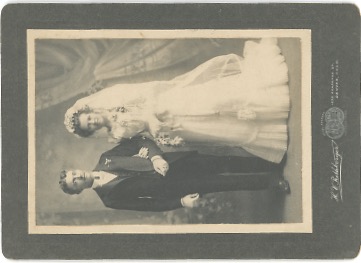
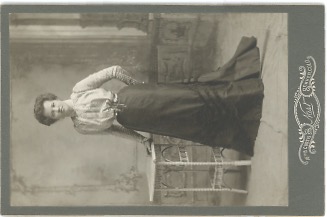
Figure 1 · Preserved with the original essay
Before we go on to Paulina let me complete the emigration story. At the age of 19, Paulina left her home and her family in September 1890 travelling from Malmö to Liverpool, and then sailed on the Pavonia (Cunard Line) to Boston, departing Sept. 25 and arriving in Boston October 5th. She then made her way to Chicago.
Left: MS Pavoia
Figure 2 · Preserved with the original essayFigure 3 · Preserved with the original essay
Sometime after her arrival in Chicago she moved to Denver, though reason is unknown, where she met and married one Fritz Youngberg on November 18, 1893. He was two years older and was a Swede as well. Either they met before she left Sweden, after she got to Chicago or after she got to Denver (probably the latter) we don’t know. After she arrived in Denver she apparently did quite well for by the 1910 census lists Pauline as married in 1891 (this is probably incorrect) with no children and that she was a landlady for borders. She and Fritz lived at 2128 California St. in Denver (that’s near downtown, but is now a parking lot). In that census Fritz is listed as being born in Sweden and was 39 years old and a machinist.
A note: At some point in this journey her named changed, from Paulina to Pauline and more importantly, as described previously, from Åström to Ostrom. Whether she was the first to change her surname, possibly because she was the first the emigrate and then the rest of the family followed suit, or it was changed after the rest of the family arrived in the States has yet to be determined. So, for now on she will be described as Pauline
Beginning in the summer of 1904 there began the first of two events that led to Pauline becoming, perhaps, the person in the family with the greatest notoriety. It seems that Pauline was a believer in spiritualism, as was her niece, Alice Elvira. She met one D.F.N. Hitchcock who was promoting a business involved in bath houses in Manitou Springs, Colorado a town just west of Colorado Springs and quite close to Pike’s Peak. (One must understand that bath houses don’t exist today - though they might be called “spas”- but were common on the frontier in rural Colorado. Today, Manitou Springs’ motto is “We just don’t have fun, we indulge in it”.) At the encouragement of Mr. Hitchcock she began attending spiritualist meetings.
From the newspapers of November 1906, we learn that “the powers of the mediums were employed to influence Mrs. Youngberg of Denver ‘to invest $4000 in a bathhouse company’ “ (approximately $117,000 in today’s value when adjusted for inflation), however in other places it is reported to be $40,000. Mrs. Youngberg testified she had attended spiritualistic meetings with Mr. Hitchcock and that the spirits told her she would make money if she would go into business with him.” In another article, she noted “Mr. Hitchcock began talking about spiritualism soon after I first met him. That was the summer of 1904.” Mrs. Youngberg said that the spirits told her the Hitchcock’s plan was a good investment and that Mr. Hitchcock was a careful business man and that she would make money.
Well, it didn’t work out quite that well and the investors sued Mr. Hitchcock to recover their money. The plaintiff’s attorney claimed that all Hitchcock had to show for their $30,000 investment was a foundation for a building worth about $2,500. Mrs. Youngberg swore that Hitchcock had taken her to a spiritualist, a Mrs. Garrey, and he told her that she would hear the voices of her dead father and mother in the air. (ed. note: curiously at that moment, both her mother and father were still alive and living in the States, residing in Erie, PA, though many claim it to be similar to a mausoleum.)
Mrs. Youngberg’s story noted “We sat around in a little circle with a trumpet on a table in the center…. It was dark so that we could not see each other and pretty soon the spirits appeared and spoke through the trumpet.” “Did you recognize the voices?” she was asked. “No,” replied Mrs. Youngberg “but I thought nothing of it as I was told that the voices would not sound like they did in life because they spoke through a trumpet.” (ed. note: I wonder if they had strong Swedish accents or sounded something like the Swedish chef. I’d like to find that trumpet and find out when Aleda is going to get her vaccine.)
The outcome of the trial to recover the investments is unknown. However, Mrs. Youngberg went on to become a rather wealthy landlord in Denver, but that is the next story.