Harold F. Littlefield,
The Littlefield Who Won the War (literally, but not single-handedly)
It is generally recognized by historians that the Battle of Midway was the turning point in the war in the Pacific during World War II. Without this key victory the war would have lasted much longer and with many more casualties than those which occurred. And it is also recognized that the keys to the victory at Midway were primarily due to superior naval intelligence, excellent tactical decision making (with some exceptions) and the bravery and dedication of the men of the air and surface fleets of the US Navy. It is generally recognized that it was the sacrifice of the torpedo squadrons from the American carriers that allowed the dive bomber squadrons to annihilate three Japanese carriers on June 4, 1942. An additional carrier was sunk the next day. One of these squadrons was Torpedo Squadron Six (VT-6), commonly called “Torpedo Six” that flew from the USS Enterprise. Another and perhaps more familiar was Torpedo Eight (VT-8) from the USS Hornet, of whom the only survivor of those who flew off that day was Ensign George Gay. One of the men of Torpedo Six was Harold F. Littlefield. This is a brief account of his life and death.
Harold Francis Littlefield was the fifth child and second son of Myron Jay Littlefield and Bertha May Mason (later Harbour) who were married in Bennington, VT on 27 Sept 1913. They were the parents of three other children: (1) Hazel Bertha (b. 1916 in NY, d. Battleboro of Pulmonary Edema and manic depression). She never married. (2) Lucinda May (b. Bennington, VT 15 Oct. 1916, d. 24 June 1975 Bennington, VT, multiple myeloma; m. Louis Francis Warner, 18 Nov. 1944), ch: daughter Joan Marie Paul of Denver, CO b. 12 Mar, 1944; d. 10 Jan 2009; occupation listed: cook, housekeeper (3) Lawrence Robert Littlefield (b. 28 Nov. 1919, Bennington, VT, d. 7 Oct. 1995 Bennington, VT, m. Dorothy Martha Blake. LRL was a dry cleaner; one child: Lawrence Edward Littlefield, b 1/28/1947 Bennington, VT,. (4) Harold Francis was born Sept 16, 1920 in Petersburg, NY.After her husband died unexpectedly in 1929 leaving her with four young children to raise, Bertha struggled for three years before she married Harry Edward Harbour in 1932. This family like millions of others endured the extreme hard times of the Great Depression. Many of the children had to work to contribute to the family’s budget. Harold was no different. In the 1930 census, enumerated April 3rd, Harold was living with his brother Lawrence on Bank Street in North Bennington, VT. The head of the house noted as Fred C. Mattison with wife Minnie Q. and another non-related young child, Edward Welch, age 6. The boys are listed as “boarders”, though perhaps they were unofficial foster-children . At this time, Harold’s mother was working (and living) as a maid/cook in a house on Division Street of North Bennington for one Edward Riley and his wife Mary. Also the time of the census (again April 1930), the two older girls Hazel Bertha and Lucinda May were living in the Warner Memorial Home, which was in Saxtons River, about 60 miles from Bennington. This home was run under the direction of another institution for children, that is, Kurin Hattin (see next). Harold’s early education was received in North Bennington, where he lived to the age of 10. He attended the Kurin Hattin home for children afterward. By 1935 (age 15) he was living in Framingham, MA. In the 1940 census is listed as living in San Diego, 6th Street, Apt 7B, along with his wife, Gertrude. His occupation is listed as “radio” and “navy”. She is listed as “waitress” in “sandwich shop”, although this was crossed out.Harold held a “good” job according to a letter his mother wrote to the Navy on 24 Jan 1938 shortly after Harold arrived at basic training in Newport, RI. She lamented the fact that Harold quit a good job to join the navy and he had to wait around the house for a month for his appointment in the Navy with no income forthcoming. It seems that Harold had owed her $20.00 for board and had not paid her anything. She stated that her husband was laid off from his job, and they very much needed the money to feed and clothe their three other children. Could the Navy get Harold to pay her what was owed? As seen through the eyes of a woman grappling with the hardships of the Great Depression, one can see how difficult circumstances must have been if she had to press her son to pay his board fee of $20.00. It is also worth noting that three years later, his pay sufficiently increased, Harold signed up for a National Service Life Insurance policy worth $9,000.00 effective 01 Mar 1941. His wife was principal beneficiary and his mother was the contingent beneficiary.
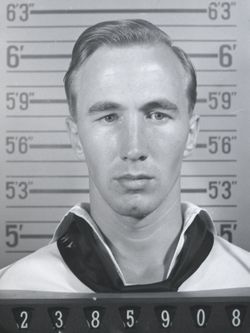
Harold F. Littlefield, who had completed the eighth grade level of education, submitted an application for enlistment into the US Navy on 20 Oct 1937 in Schenectady, NY. After his mother, Bertha May Harbour, signed the consent form on 20 Nov 1937, Littlefield signed a "minority" enlistment for four years as an Apprentice Seaman (A.S.) in the US Navy (238-59-08) on 4 Jan 1938 at the Naval Recruiting Station, Albany, NY. He was transferred to the Naval Training Station (NTS), Newport, RI for basic training. After completing basic training on 01 April 1939, Littlefield took 12 days of recruit leave. Littlefield was detached from the NTS on 3 May 1938, and he transferred on 04 May to the Receiving Station, Norfolk, VA for further transfer to the aircraft carrier USS Enterprise's (CV-6) pre-commissioning unit. As noted below, the Enterprise was commissioned 12 May 1938. As such, he could claim to be called a “plankowner”.
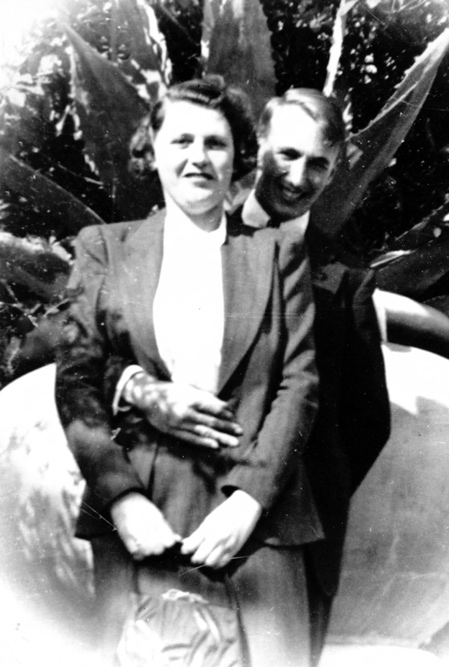
Harold Francis was married before the war to Gertrude Beacher Forehand. Gertrude was born 2 Nov 1921 in Edenton, N.C. She met her first husband, Harold F. Littlefield, at Ocean View Amusement Park (Norfolk, VA) and they were married 15 April 1939 in South Mills, Camden, NC. (note: South Mills is in North Carolina, just across the border from Virginia, and about 40 miles south of Norfolk.) He was 19 and she was 17. He was in the U.S. Navy assigned to Torpedo Squadron Six stationed aboard the USS Enterprise (CV-6) in Norfolk. He was a radioman and rear seat gunner of an airplane called the Douglas Devastator Torpedo bomber (TBD). They had one son, Harold Francis Littlefield, Jr. As will be seen, Harold Francis was engaged in operations against the enemy during the Battle of Midway June 4, 1942. He was reported "missing in action" from that battle and was never recovered. As a result, their son, Harold F. Littlefield Jr., (born 18 Jan 1942) never got to see his father.
Gertrude's second husband was William Herman Zwicker also served in the U.S. Navy during World War II. They were married 17 Sept 1943 in South Mills, Camden, NC. (Ed.: am I getting a pattern here?) He was a ship's cook and was stationed aboard LSM 384 with the amphibious force in the Pacific Theater. They were married Sept. 17, 1943. She passed away July 7, 2009 at age 87 in Portsmouth, VA and is buried in Norfolk. Gertrude leaves two sons, Harold F. Littlefield with his wife Debbie of Portsmouth, VA and Jack H. Zwicker with wife Miranda (141 Forest Dr., Wellsburg, WV 26070).
The USS Enterprise (CV-6) “The Big E”
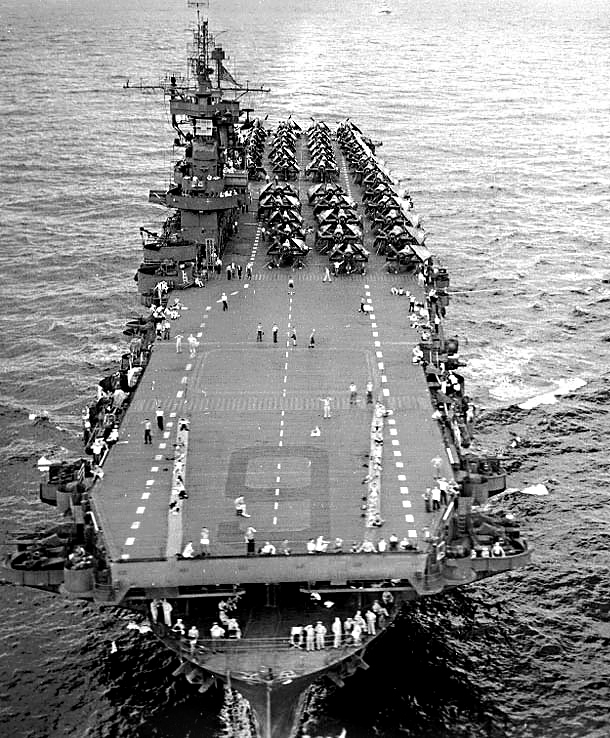
She was the sixth aircraft carrier in the US Navy. She participated in more major actions of the war against Japan than any other United States ship. Enterprise earned 20 battle stars, the most for any U.S. warship in World War II, and was the most decorated U.S. ship of World War II. She is also the first American ship to sink an enemy warship during the Pacific War when she sank Japanese submarine I-70 on 10 December 1941. After commissioning she operated along the East Coast and the Caribbean until April 1939 when she was ordered to duty in the Pacific. (Remember, Harold and Gertrude were married 15, April, 1939 in North Carolina). After transit, she was first based out of San Diego and then Hawaii.
Enterprise was launched 3 October 1936 at Newport News Shipbuilding and was commissioned on 12 May 1938, and Littlefield reported on board for duty. He was transferred to Torpedo Squadron Six (VT-6) that was attached to the Enterprise on 20 Sep 1938 for duty. He was advanced in rate from A.S. (Able Seaman) to Seaman Second Class (S2c) the same day. During 1939, Enterprise and her embarked squadrons conducted shake down cruises and workup exercises at various times. After transit of the Panama Canal, the Enterprise joined the Pacific Fleet April 1939 in San Diego. While the ship was in port, the squadrons were temporarily based ashore at their assigned airfields. Their tempo of operations increased during 1940. He was advanced in rate to Seaman First Class (S1c) on 16 Feb 1940. On 16 Jun 1940, Littlefield received orders to duty involving regular and frequent aerial flights in aircraft as an aircraft radioman. On 01 Oct 1940, Littlefield completed instruction in belting and loading ammunition, cleaning, servicing, and upkeep of the Browning automatic machine gun. He was advanced in rate to Radioman Third Class (RM3) on 16 Nov 1940.
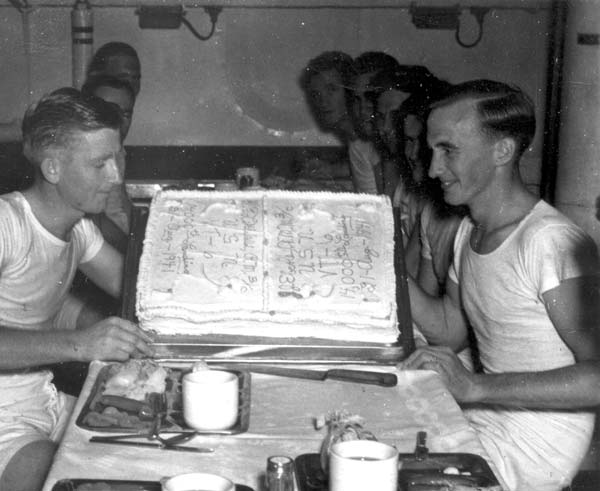
There is one interesting photo from that time period, a picture of Harold which appeared in Life magazine, issue uncertain. Caption also is somewhat curious: Harold G.(ed. ?) Littlefield (left) and John J. Eberle of Torpedo Six celebrate the 14,000th landing on Enterprise CV-6, 21 August 1941 (as dated on the cake). Littlefield was later killed in action at the Battle of Midway, 4-6 June 1942. (from Enterprise Image Library: www.cv6.org/noumea/default.htm)
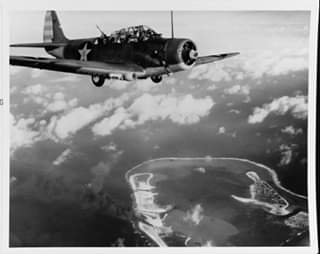
During the months prior to 7 Dec 1941, and the entry by the United States into WWII, Enterprise shuttled Army Air Force P-39s and P-40s, as well as Navy aircraft from US West Coast ports to Pearl Harbor and beyond. On 28 Nov 1941, Enterprise left San Diego with a cargo of Marine Fighting Squadron 211 (VMF-211) aircraft and pilots destined for Wake Island. The Marine pilots and their planes flew from Enterprise to Wake Island on 02 Dec 1941. Enterprise was scheduled to arrive back in Pearl Harbor on 06 Dec, but was delayed due to inclement weather. Fortunately, she wasn't in port on the morning of 07 Dec but arrived later that evening. Harold Littlefield was honorably discharged from the Navy on 08 Dec 1941. He reenlisted as an RM3 on 09 Dec 1941 at Pearl Harbor, HI for a period of four years. The next day, he qualified for duty as an Aircraft Radioman. Several weeks later on 01 Jan 1942, RM3 Littlefield was advanced in rate to Radioman Second Class (RM2). A little know fact (as noted by one of his fellow shipmates) was that he was nicknamed “Feets”, apparently in reference to his shoe size.In the first five months of 1942, Enterprise and her Air Group participated in the Gilbert and Marshall Islands raids and Wake Island Raid in Feb 1942. This picture depicts a moment from the Battle of Wake Island, February 24, 1942. This is one of nine TBD-1 Devastators from VT-6 that went into the fray armed with 100-lb general purpose bombs. This plane is 6-T-5 (Bu. No. 0368) flown by ENS J. P. Gray (pilot) and his crew, RM 2/c H. F. Littlefield and AOM 2/c O. G. Fowe. You can see Wake Island clearly, about 12,000 feet below the plane. Four months later, this plane flew at the Battle of Midway, June 4. It was one of only four TBD-1 Devastators to return to the fleet. The occupants in this photograph were not so lucky. ENS Gray did not survive the battle. He was killed in action while serving with another squadron, Torpedo Squadron Eight, which lost all fifteen of its TBD-1s. The gunner, Littlefield, was also killed in action while serving with Torpedo Six, shot down in 6-T-7, killing him and his pilot, LTJG Lloyd Thomas. (from Never Call Me a Hero or Facebook).
On 01 Feb 1942, VT-6 attacked Japanese forces on Kwajalein and Wotje. Petty Officer Littlefield participated in that attack (on Wotje) as a member of a flight crew in the bombing planes, (plane 6 VT 5) with Ens. J.P. Gray as pilot and AOM2c O.G. Fowe as bombardier and Littlefield as gunner. He changed his rate on 01 March 1942 from RM2 to Aviation Radioman Second Class (ARM2). In March, Enterprise’s Air Group attacked enemy installations on the Marcus Islands raids, and in April, she supported the Doolittle raid. In early May, Enterprise and the aircraft carrier USS Hornet (CV-8) were sent to the South Pacific to assist the aircraft carriers USS Lexington (CV--2) and USS Yorktown (CV-5) who were engaged in the battle of the Coral Sea. However, before the ships arrived on-scene, the battle of the Coral Sea was over. After participating in additional operations in the Central Pacific, Enterprise returned to Pearl Harbor on 26 May and began intensive preparations to meet an expected Japanese thrust at Midway Island. On 28 May, Enterprise and Hornet sortied from Pearl Harbor and proceeded toward Midway, to a place designated as “Point Luck”, north east of Midway Island.
The Battle of Midway June 4, 1942
0906 Enterprise launches attack groups including 14 VT’s aircraft which including plane 6T7 TBD1 (Bureau no. 0294) piloted by Lt. (jg) Lloyd Thomas and Harold F. Littlefield, as radioman/gunner (plane navy i.d. 238 59 08), ARM2c, USN.
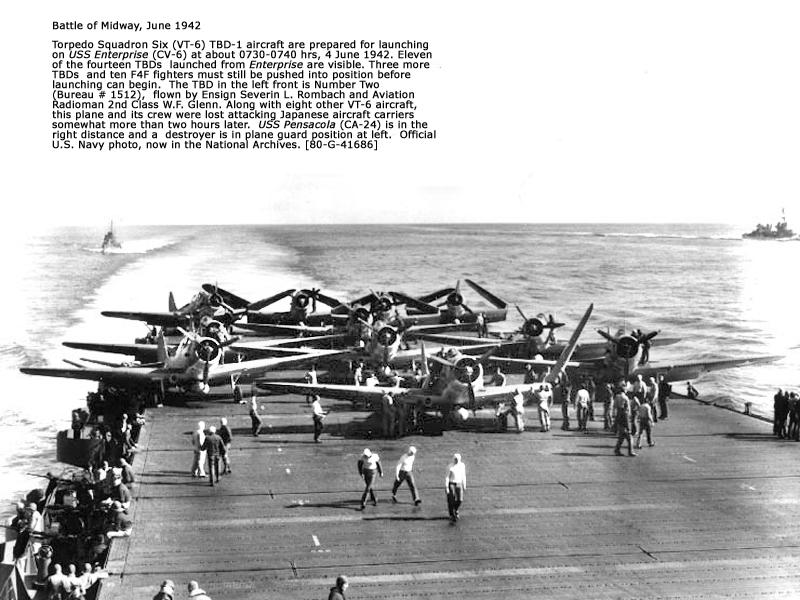
On the morning of 4 Jun 1942, pilot Lt jg Lloyd Thomas (Thomas had joined VT6 13 Dec 1939) and his radioman-gunner Aviation Radioman Second Class Harold Francis Littlefield launched their torpedo plane, a Douglas Devastator torpedo bomber TBD 6-T-7, Bu No 0294 from USS Enterprise (CV-6) along with other members of VT-6 and Air Group Six (an air group consists of torpedo bombers, level/dive bombers and scouting/attack fighter planes) to attack the Japanese striking force (called Kedo Butai, meaning “Mobile Force”) that was approaching Midway.
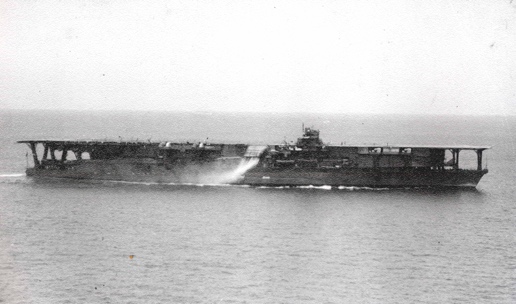
The “Big E’s” TBD crews spotted smoke to the northwest. Seeing three carriers inside a six and fifteen-mile outer screen, Lt. Cdr Lindsey sent his second division under Lt. Art Ely to starbord. The CO (Lindsey) hoped to trap the 38000 ton Kaga (right) in a hammer and anvil attack, but the big carrier swung away from her westerly heading to the north, prolonging the approach for both VT-6 divisions. 1220 VT groups commenced attack. About ten minutes after the initial sighting, the Devastators were discovered and a cruiser opened fire with her “8-inchers” to show the Zeros where to look. Japanese fighter direction, although unsophisticated, proved effective. Like VT-8 before it, Torpedo Six tackled an aroused defense now numbering 34 fighters, in addition to two battleships, three cruisers and a dozen destroyers.
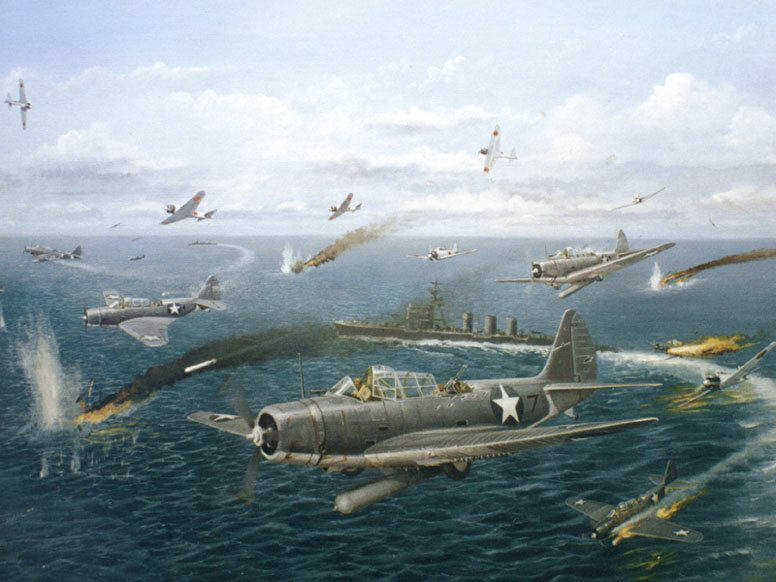
Separated from their covering fighter protection, VT-6 comprised of 14 torpedo planes pressed their attack even though overwhelmed by superior numbers of Japanese fighter aircraft and heavy anti-aircraft fire. One by one, the planes of VT-6 were shot down. Of the 14 torpedo planes that attacked the Japanese carriers from Enterprise, only four returned. LT jg Thomas and Petty Officer Littlefield did not return from their mission. According to the USS Enterprise after action report for the Battle of Midway dated 8 Jun 1942 for VT-6, Ltjg L. Thomas, USN and ARM2 H.F. Littlefield, USN were listed among the personnel losses. Their remains were unrecoverable. The Navy Dept. sent a telegram to Littlefield's wife, Gertrude, dated 17 Jun 1942, to inform her that her husband was missing in action. Littlefield and his pilot were declared "presumed dead" on 5 Jun 1943. The painting shows the seven TBDs of Ely’s Division, with the one in the foreground being the Thomas/Littlefield TBD from 6-T-7.
Source: After action report of G.D. Murray: Battle of Midway: 4-7 June 1942, Online Action Reports: Commanding Officer, USS Enterprise, Serial 0133 of 8 June 1942 : The attack delivered upon enemy carriers by the torpedo squadrons of our forces is believed to be without parallel for determined and courageous action in the face of overwhelming odds. These crews were observed to commence their attack against heavy anti-aircraft fire from the enemy carriers and supporting vessels while opposed by enemy Zero fighters in large numbers. The enemy fighter opposition was so strong and effective that ten torpedo planes out of fourteen of Torpedo Squadron SIX did not return. It is recommended that the Navy Cross be awarded to each pilot and gunner of Torpedo Squadron SIX who participated in this bold and heroic attack.
Lt. Ely, the executive officer of VT-6 group of planes, radioed for the VF-6 fighter escort to “come on down”, but apparently the Wildcats never heard the call. Already concerned about fuel, they orbited overhead for nearly 30 minutes before turning for home. Consequently, TorpRon Six went in alone. The numbers just didn’t work. Forced into a stern chase, the TBD’s only had an 85 knot advantage on the 26-knot Kata, their Mk 13’s less than that. Lindsey’s crews were exposed to AA for around 15 minutes ---. Then the fighters piled in. Although VT-6 also had twin-mount .30 cals., they ceded their tormentors a 200-knot advantage. By ones and two the TBDs were downed…. No pilot gained more than a 70-degree angle on either bow, none got closer than 800 yards. Perhaps six torpedoes went into the water, aimed at Kaga, but none connected in their 12-ft deep runs. Five airplanes cleared the Japanese task force.
From: TBD Devastator Units of the Units of the US Navy, by Barrett Tillman,
Soon after the torpedo plane attacks, American carrier dive bombers arrived over the Japanese carriers almost undetected and began their dives. At 10:22, 25 SBD Dauntless dive-bombers from Enterprise, led by C. Wade McClusky, hit Kaga with one 1,000-pound (450 kg) bomb and others with at least three 500-pound (230 kg) bombs. The first landed near her rear elevator and set the berthing compartments on fire, and the next bomb hit the forward elevator and penetrated the
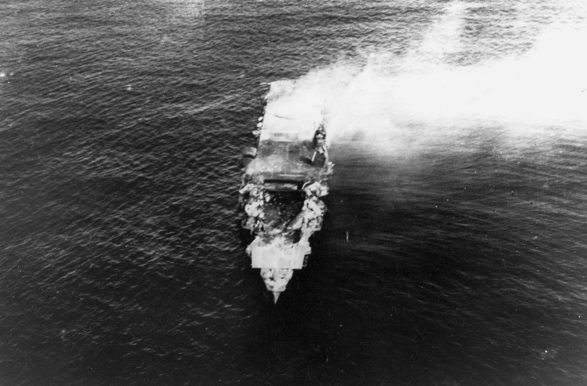
upper hangar, setting off explosions and fires among the armed and fueled planes on her hangar deck. Captain Okada and most of the ship's senior officers were killed by the third bomb, which hit the bridge. The 1000-pound bomb hit amidship and penetrated the flight deck to explode on the upper hangar. The explosions ruptured the ship's avgas lines, damaged both her port and starboard fire mains and the emergency generator powering her fire pumps, as well as knocking out the carbon dioxide fire suppression system. Fueled by the avgas pouring onto the hangar deck, the fires detonated the 80,000 pounds (36,000 kg) of bombs and torpedoes strewn across the hangar deck in a series of catastrophic multiple fuel-air explosions that blew out the hangar sides.
The following was noted in the Bureau of Personnel magazine, “All Hands” from April 1943, #313, p 50 – 51: “The following, all missing in action, who served as free gunners and radio operators of planes in a torpedo , squadron in the Battle of Midway, for returning the fire of enemy Japanese fighters so as to enable their pilots to press home attacks against concentrated antiaircraft fire and violent fighter opposition”: Harold Francis Littlefield, ARM2c USN of Bennington, VT. This was taken from the DFC awarded. The others, radiomen-free gunners are also listed in this brief article and are noted below.
Memorial
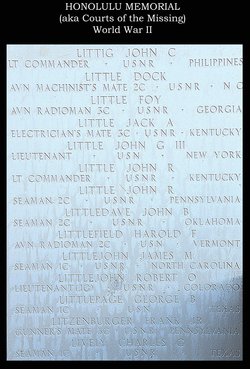
Harold F. Littlefield is enscribed on the Honolulu Memorial Courts of the Missing, World War II. This is in the Punchbowl Cemetery just outside of Honolulu, Hawaii.
In a letter sent by the Acting Commanding Officer of VT-6 to the Commander in Chief, US Pacific Fleet (CINCPACFLT), dated 10 Jun 1942, Petty Officer Littlefield was recommended for the award of the Navy Cross. After review, CINCPACFLT recommended that Littlefield be posthumously awarded the Distinguished Flying Cross (DFC). He was also posthumously awarded the Purple Heart medal, Presidential Unit citation, American Defense Service Medal with "Fleet" clasp, Asiatic-Pacific Campaign Medal with two battle stars and the World War II Victory Medal. His family was also presented with a Presidential commemoration.----------------------------------------------
AWARDS AND MEDALS
The President of the United States of America takes pleasure in presenting the DISTINGUISHED FLYING CROSS to HAROLD F. LITTLEFIELD, AVIATION RADIOMAN SECOND CLASS UNITED STATES NAVY for service as set forth in the following CITATION: "For extraordinary achievement and heroic conduct in aerial flight as a free gunner and radio operator of an airplane in Torpedo Squadron SIX in action against enemy Japanese forces in the Battle of Midway, June 4-6, 1942. LITTLEFIELD's unflinching devotion to duty and his courageous determination in returning the fire of enemy Japanese fighters enabled his pilot to press home an attack against concentrated anti-aircraft fire and violent fighter opposition. His marked integrity in maintaining continuous fire in the face of such tremendous odds and his complete disregard for his own personal safety were in keeping with the highest traditions of the United States Naval Service." [Citation wording is from a copy in his service record]General Orders: Bureau of Naval Personnel Information Bulletin No. 313 (April 1943) ---------------------------------------------------------------USS Enterprise Presidential Unit citation (1942)For consistently outstanding performance and distinguished achievement during repeated action against enemy Japanese forces in the Pacific, war area, 7 December 1941, to 15 November 1942. Participating in nearly every major carrier engagement in the first year of the war, the Enterprise and her air group, exclusive of far-flung destruction of hostile shore installations throughout the battle area, did sink or damage on her own a total of 35 Japanese vessels and shot down a total of 185 Japanese aircraft. Her aggressive spirit and superb combat efficiency are fitting tribute to the officers and men who so gallantly established her as an ahead bulwark in the defense of the American nation.-----------------------------------------------------------His family also received an honor scroll from President Franklin D. Roosevelt in commemoration of Petty Officer Littlefield. The commemoration reads: In grateful memory of Harold Francis Littlefield who died in the service of his country, SEA, Pacific Area, ATTACHED U.S.S.ENTERPRISE, 5 JUNE 1943 (Presumed)*. He stands in the unbroken line of patriots who have dared to die that freedom might live, grow, and increase its blessings. Freedom lives, and through it, he lives -- in a way that humbles the undertakings of most men. (Signed) Franklin D. Roosevelt, President of the United States(*Presumed dead on 5 Jun 1943. Actual date gone missing was 4 Jun 1942.)--------------------------------------Of the 14 Torpedo Bombers from VT-6 that flew against the Japanese on 4 Jan 1942 only four returned to Enterprise. Machinist Albert Walter Winchell (NAP), and his gunner, Aviation Radioman 3rd Class Douglas M. Cossitt, made a water landing before sighting Enterprise. They survived 17 days on the open seas in a rubber raft before being rescued by a Patrol Squadron 24 PBY on 21 Jun 1942, some 360 miles northward of Midway. In all, five VT-6 crews survived the morning attack.--------------------------------These are the pilots and crew of VT-6 that were killed in action on 04 June 1942:1) Lt Arthur Vincent Ely (VT-6 XO) and his gunner, RM3 Arthur Richard Lindgren2) Lt Paul James Riley and his gunner, ARM2 Edwin John Mushinski3) Ltjg John Thomas Eversole and his gunner, RM2 John Udell Lane4) Ltjg Randolph Mitchell Holder and his gunner, ARM3 Gregory Joseph Durawa5) Ltjg Severin Louis Rombach and his gunner, ARM2 Wilburn Forrest Glenn6) Ltjg Lloyd Thomas and his gunner, ARM2 Harold Francis Littlefield7) Ensign John Wiley Brock and his gunner, ARM3 John Melville Blundell8) Ensign Flourenoy Glenn Hodges and his gunner, RM2 John Hail Bates9) Lcdr Eugene Elbert Lindsey (CO VT-6) and his gunner, ARMC Charles Tilden Grenat----------------------------------------Contrary to what some researchers have stated, neither Lt jg Holder nor any of the Navy/Marine Corps aviators who engaged in aerial combat during the Air Battle of Midway were/are eligible for the Combat Action Ribbon (CAR). See SecNavInst 1650.1H (Navy/Marine Corps Awards Manual dated 22 Aug 2006) for award criteria details.
Harold Francis Littlefield: DFC
The President of the United States of America takes pride in presenting the Distinguished Flying Cross (Posthumously) to Aviation Radioman Second Class Harold Francis Littlefield (NSN: 2385908), United States Navy, for heroism and extraordinary achievement while participating in aerial flight. A free gunner and radio operator of a Torpedo Squadron SIX (VT-6) airplane in the Battle of Midway, 4 to 6 June 1942, he manned his gun and continued to return fire of Japanese fighters with such courage and utter disregard for personal safety that he enabled the pilot to press home his attack in the face of continued fighter opposition. It is difficult to conceive of a situation where a free gunner would be forced to fight against such desperate odds as were encountered in this attack. The courage and devotion to duty he displayed were in keeping with the highest traditions of the United States Naval Service.